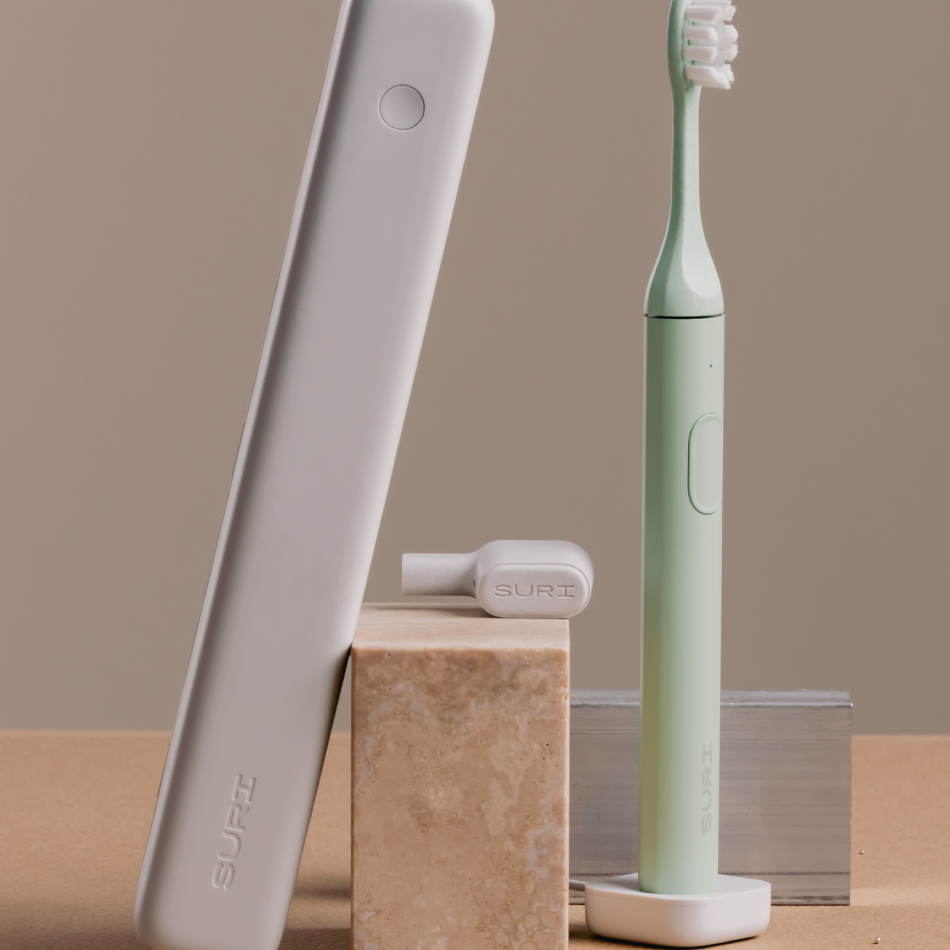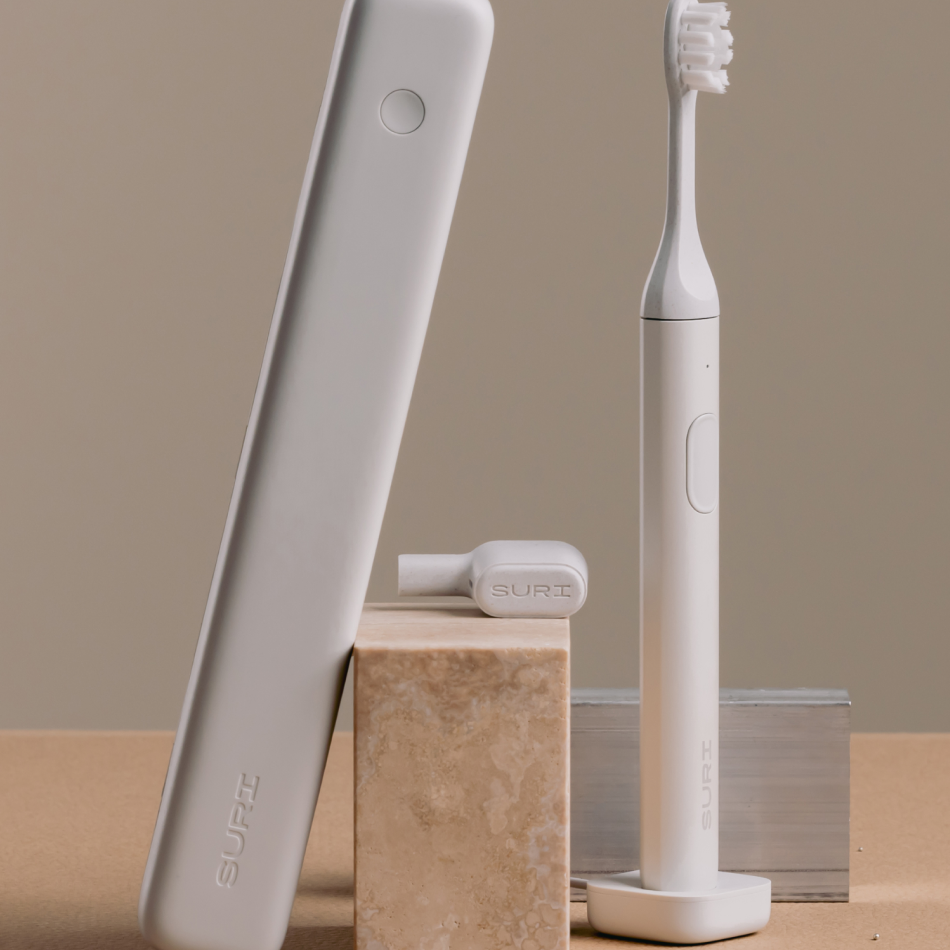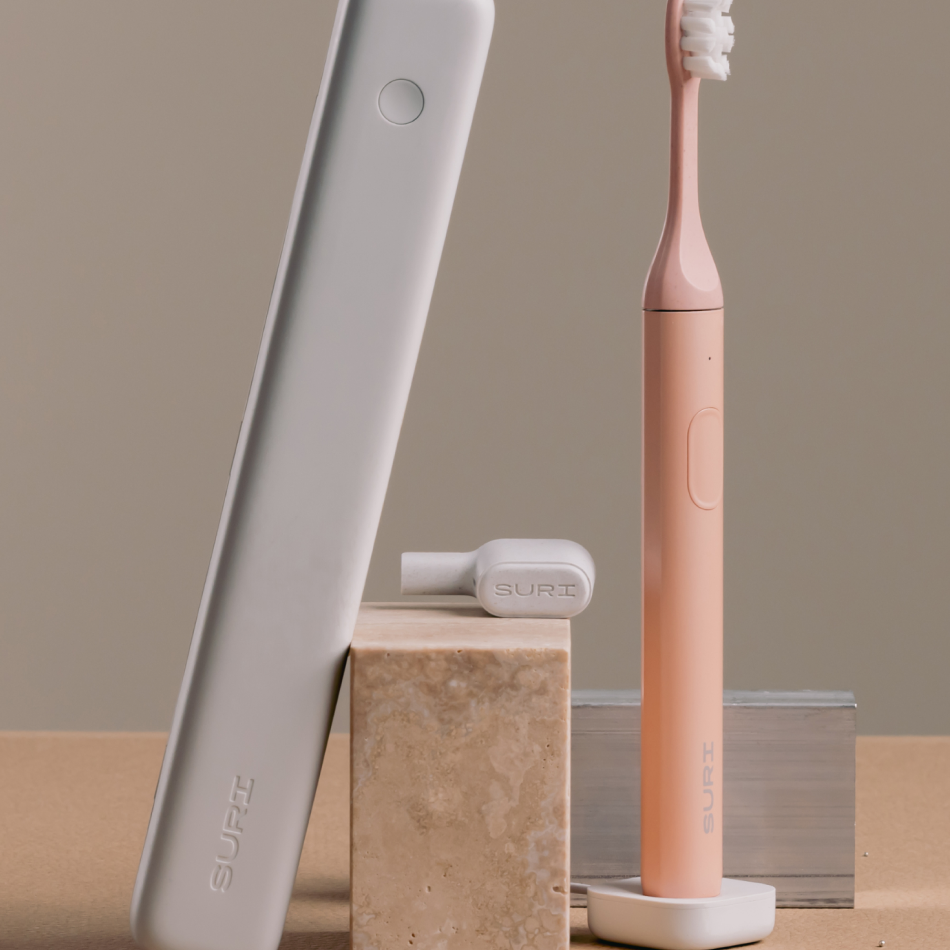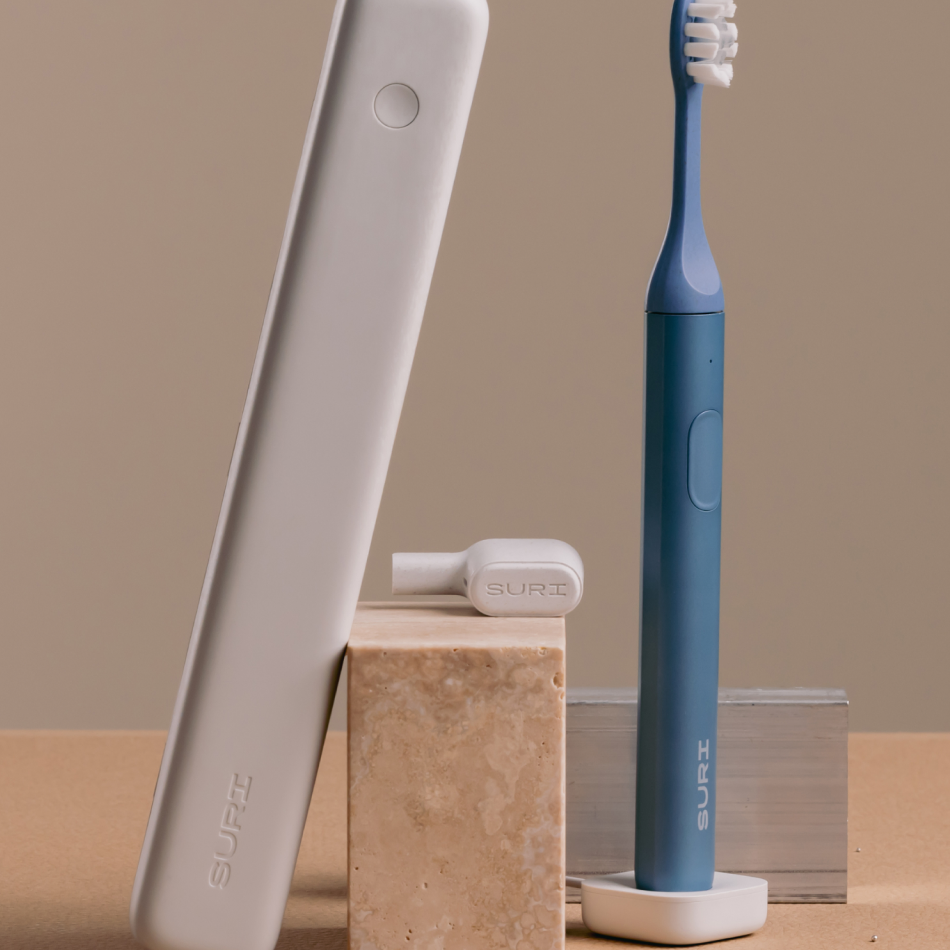

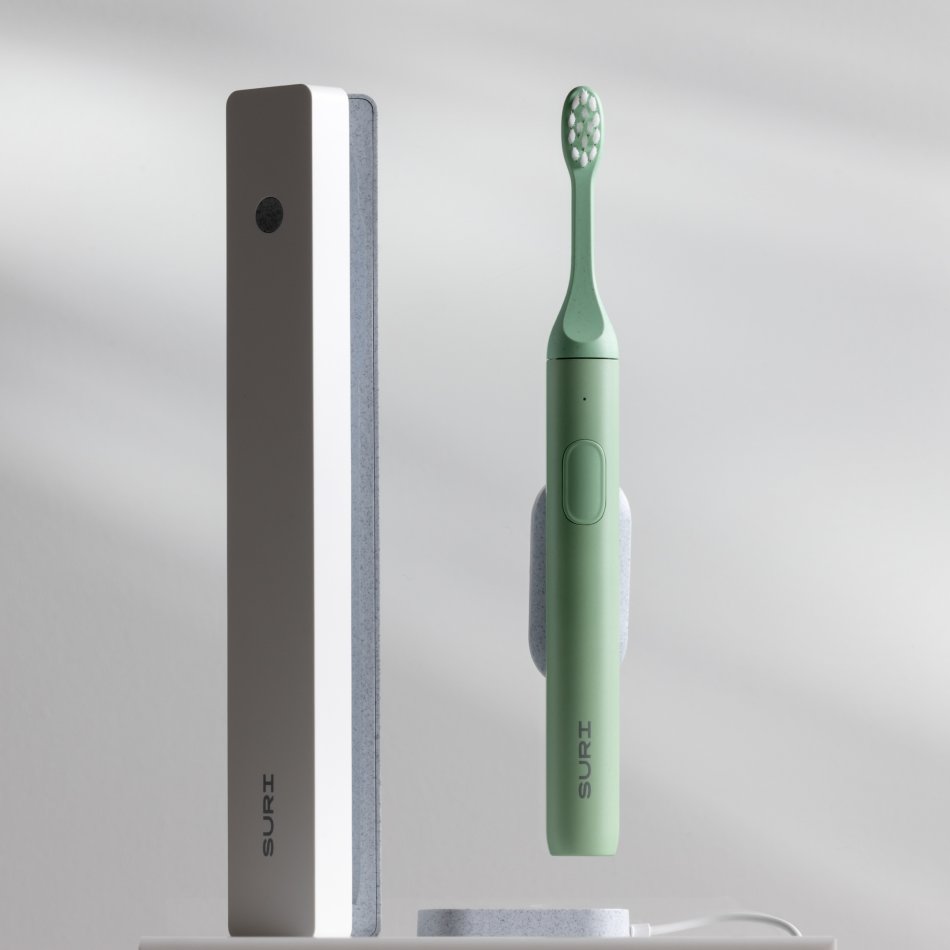
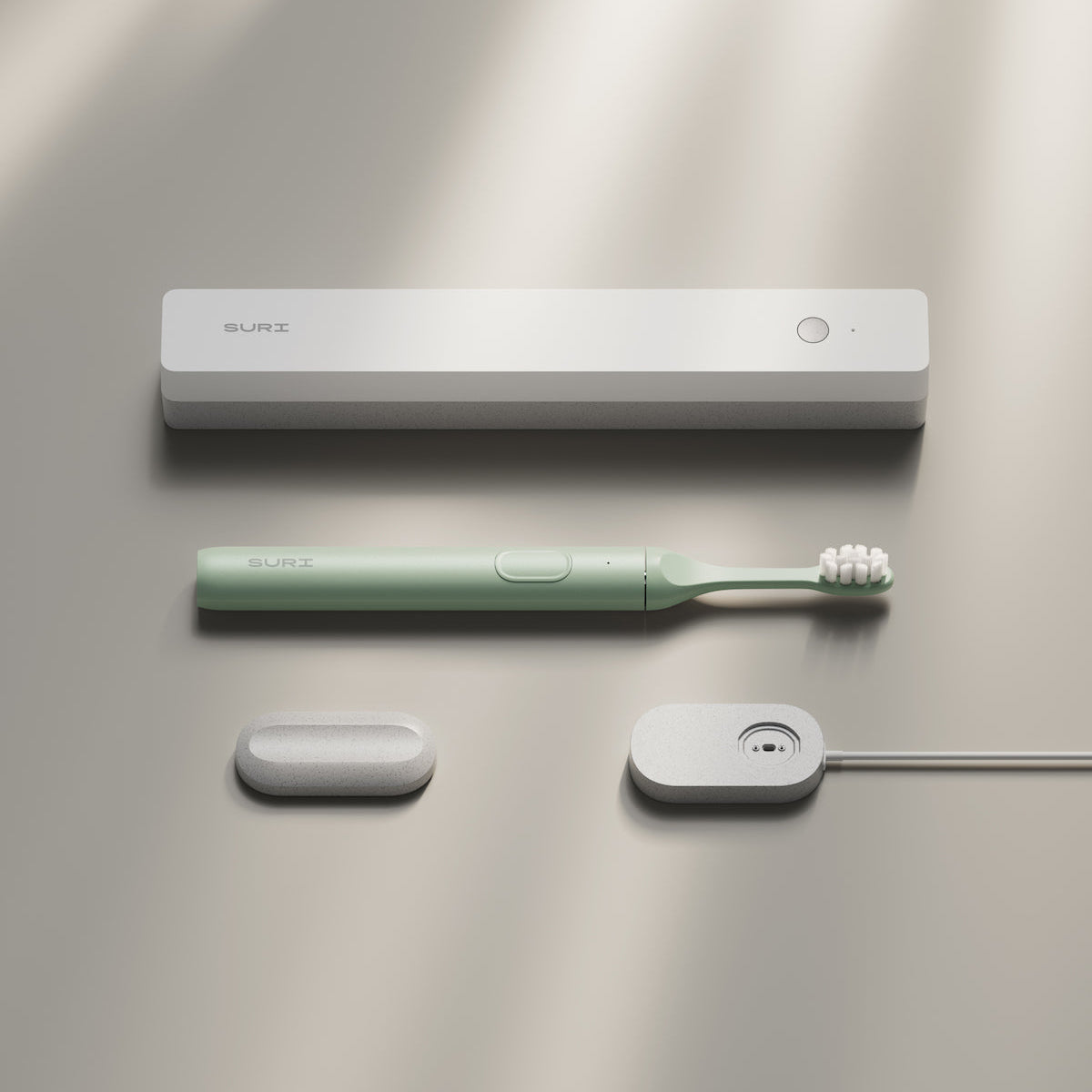
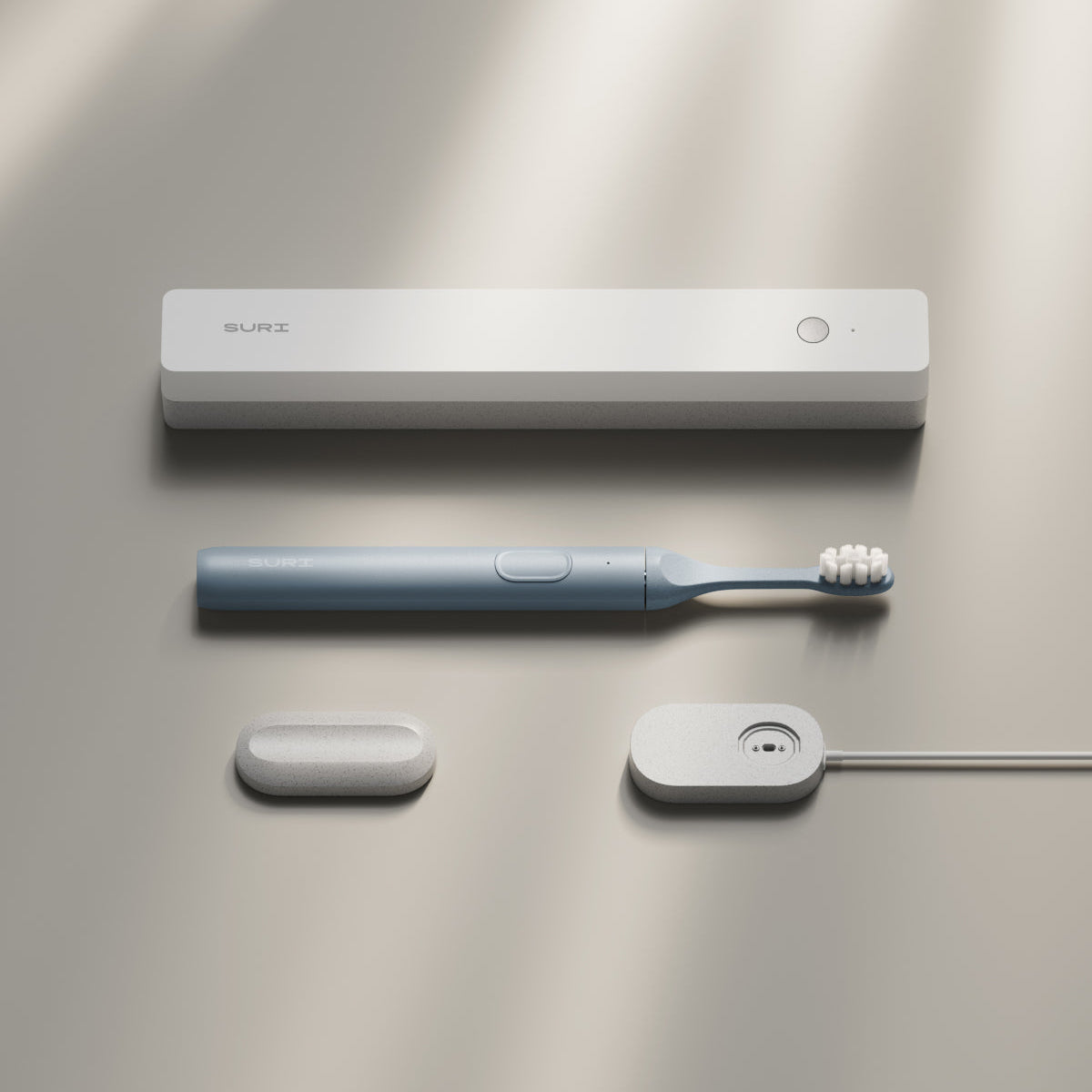
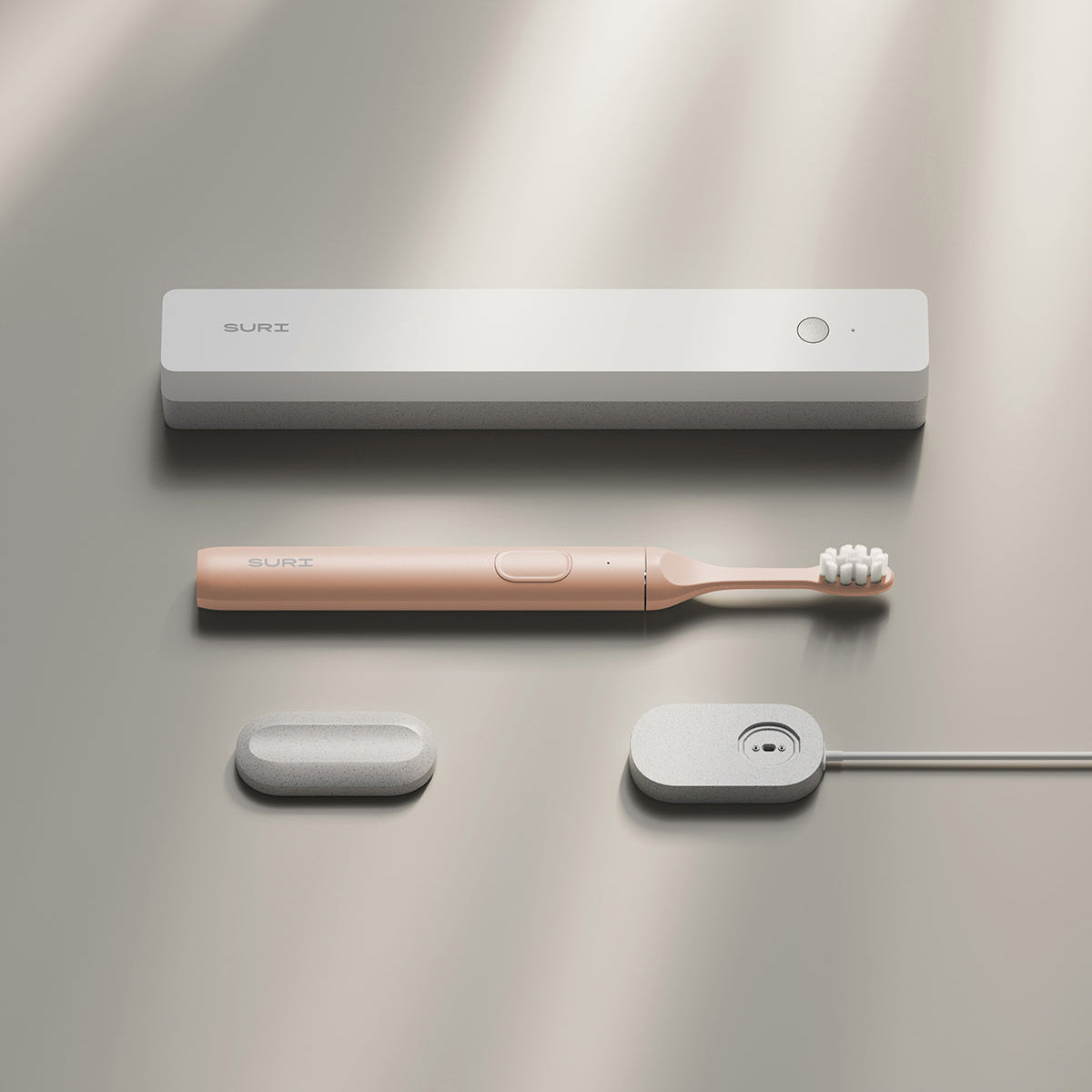

The short answer: The electric toothbrush worth buying is the SURI 2.0 Sonic (£95). It's the only mainstream brush with a genuine repair-and-recycle loop: recyclable plant-based heads, a recyclable aluminium body, and a send-back repair service instead of a sealed unit headed for landfill. One honest caveat: the battery is replaced by SURI's service rather than swapped at your kitchen table, but that's still far better than a cheap brush you bin in two years.
Written by Tara Button, founder of Buy Me Once and author of A Life Less Throwaway (HarperCollins).
Why electric toothbrushes keep dying
I have a drawer of dead toothbrushes. I'm not proud of it.
Four or five of them, all the same story: brilliant for about two years, then the battery starts holding less and less charge, until one morning it gives you a sad little half-buzz and dies somewhere around your back molars. And because the battery is sealed inside a glued-shut plastic body, there's nothing you can do. You can't open it. You can't replace the one part that's failed. So the whole thing, motor and all, goes in the bin, and you buy another one exactly like it, and the cycle starts again.
I kept them in a drawer for a while out of a vague guilt, as if keeping them was better than binning them. It isn't. It's just a drawer of guilt.
So I went down a proper rabbit hole on why electric toothbrushes die so predictably, and whether any of them are actually built so it doesn't happen. The answer is more interesting (and more honest) than I expected. Here's what I found.
How I judged these (the Weakest Link method)
How do you tell which electric toothbrush will last? You look at what breaks first, not how minty it feels in week one.
I didn't brush my teeth with each one for a week and rank them on how fresh I felt. Every review does that, and it tells you nothing about year three, which is exactly when these things die.
Instead I worked out every common way an electric toothbrush dies, ranked those failure points by how often they're the actual killer, and then judged each brush on how well it's engineered the worst one out. For electric toothbrushes, one failure point towers over all the others: the sealed battery.
A quick honesty note, because it matters and because we'd rather lose a sale than mislead you: my top pick's battery still isn't something you can swap at home (more on that below). But it's the only mainstream brush with a real repair-and-recycle route instead of a guaranteed trip to landfill, and on the Weakest Link method that's what wins. I'll show you the working.
What actually kills an electric toothbrush
| Failure point | How often it's the killer | What good engineering (or a good service) does about it |
|---|---|---|
| Sealed battery degrades (holds less charge each year, then dies) | By far the most common, and usually fatal | A repairable design or a send-back battery service, so a dead battery is a fix, not a funeral |
| Brush heads get discontinued (proprietary head, no longer made) | Common over a long life | Heads kept in production and sold openly, ideally recyclable ones you can post back |
| Water gets into the charging contacts or motor seal | Common | A properly sealed body, and clear guidance to keep the contacts dry between uses |
| Plastic body cracks, stains or goes brittle | Occasional | A metal (aluminium) body that takes years of bathroom life without degrading |
| Charger lost or fails (proprietary, no longer sold) | Occasional but terminal | A standard induction charger that's still sold separately years later |
The headline: the thing that kills almost every electric toothbrush is the one part the maker has sealed in so you can't touch it. Solve that one weak link, even via a postal service rather than a screwdriver, and you've solved most of the problem.
The evidence
- It's chemistry, and it's predictable. The small lithium battery inside a powered toothbrush holds useful charge for roughly 500 to 1,000 full charge cycles, which works out at about two to three years of twice-daily brushing before you get that sad half-buzz. The same wear happens in a £30 brush and a £250 one. Paying more doesn't buy you a battery that ages more slowly. It usually just buys you more features to break.
- Most of the category is sealed shut. In the vast majority of electric toothbrushes the battery isn't user-replaceable, and opening the unit voids the warranty (and isn't safe). So the one part guaranteed to fail first is the one part you're specifically not allowed to reach.
- And it all ends up in the same place. UK homes are sitting on an estimated 527 million unused small electrical items, and the country produces well over a million tonnes of electrical waste a year, most of it never properly recycled. A drawer of dead toothbrushes is a tiny, very common version of that national pile.
What I'd avoid (and why)
- Any brush with the battery sealed in and no service to replace it, which is almost the entire big-name category.
- Paying £150 to £250 for "premium" features (apps, pressure screens, cases that talk to you). The battery in the £250 brush ages exactly like the one in the £30 brush. You're buying more things to break, not more years.
- Brushes with proprietary heads from a brand that might vanish. When the heads are discontinued, a perfectly good handle becomes a paperweight.
- Treating the handle as disposable. The cheapest buy-it-for-life move there is: keep the handle, swap only the heads, and recycle the old ones.
The verdict
Which electric toothbrush lasts longest, and is it worth it? Here's the fast answer.
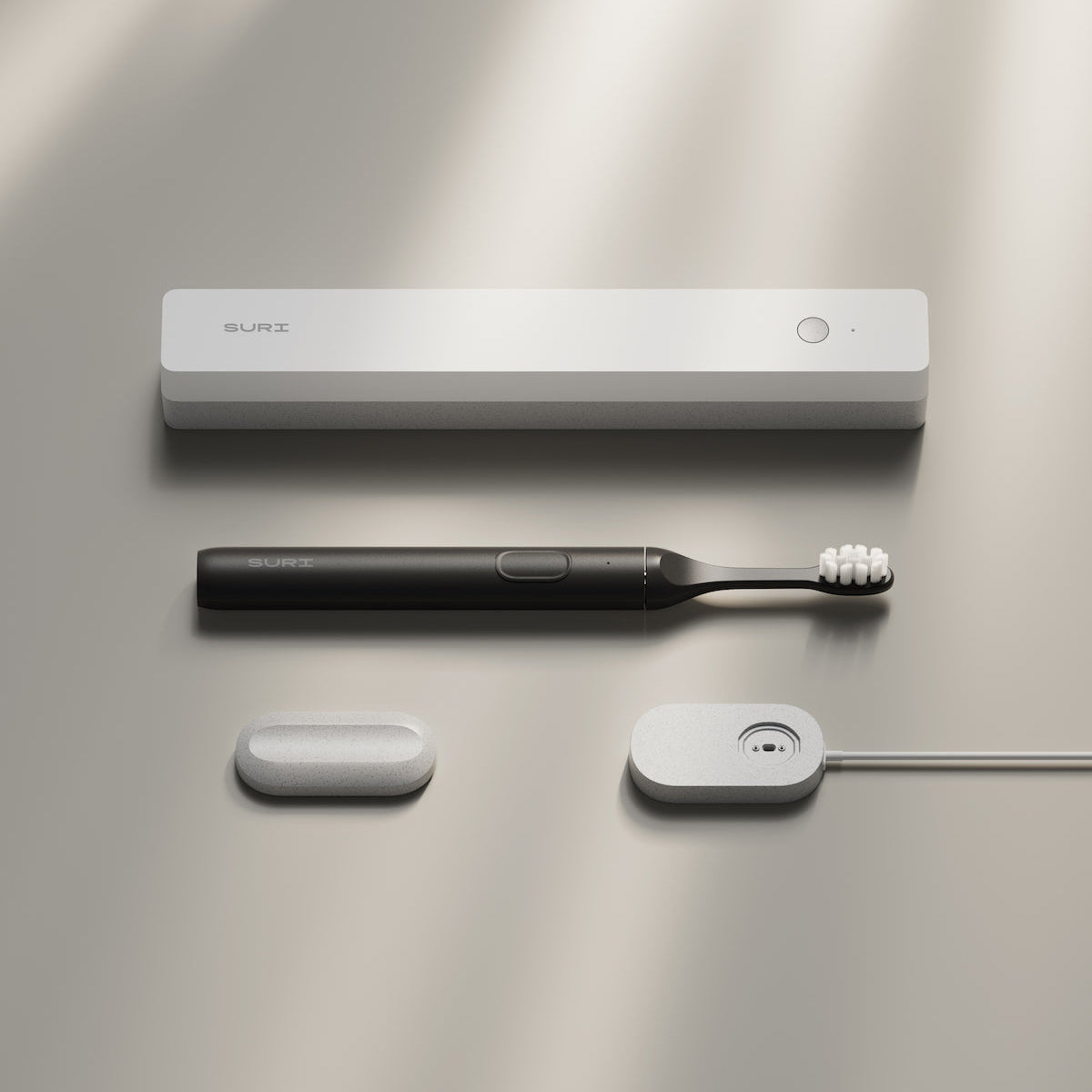
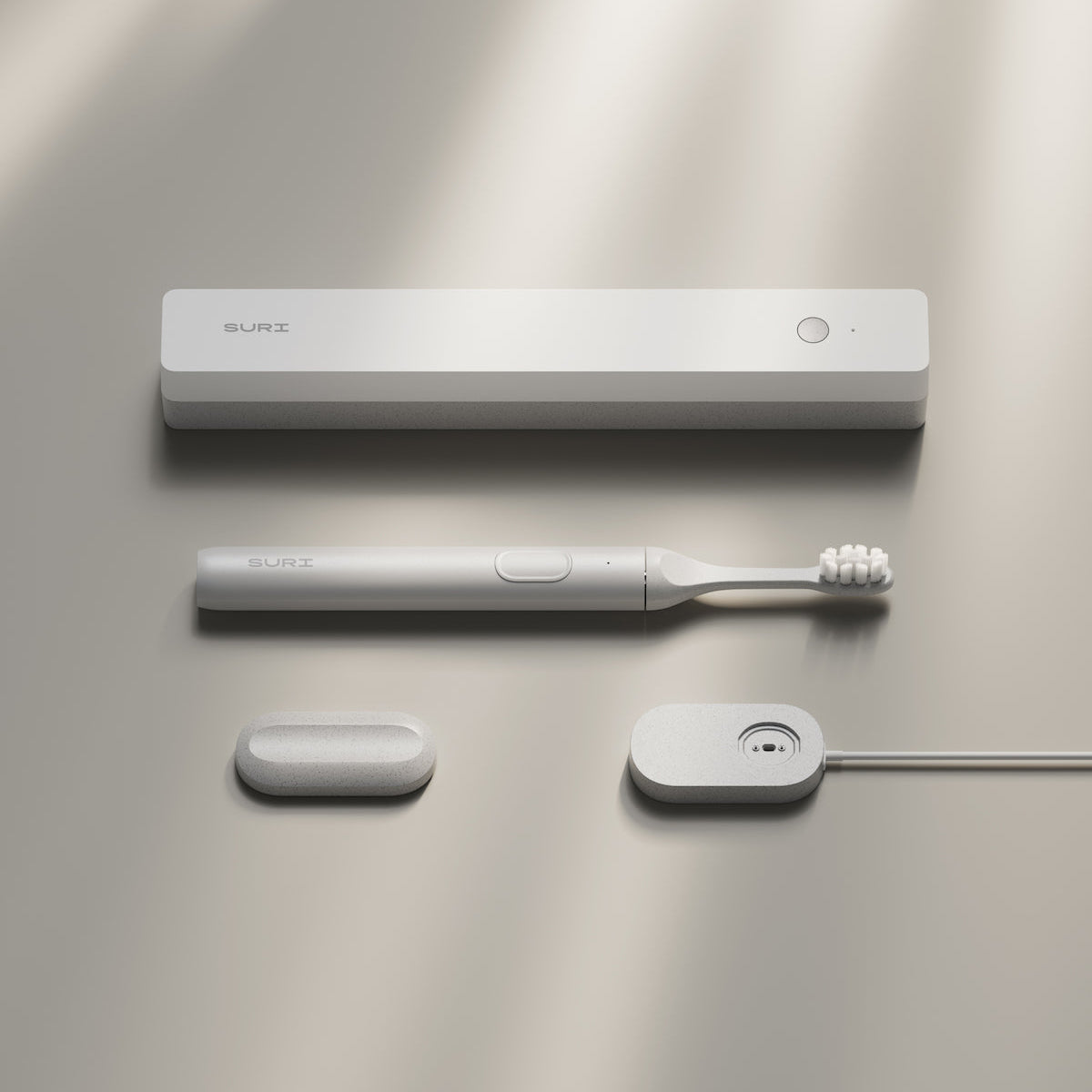
- Best overall, the one built not to die: SURI 2.0 Sonic Electric Toothbrush + Case (£95). The only mainstream brush with a genuine repair-and-recycle loop, recyclable plant-based heads, and a recyclable aluminium body. Not perfect (the battery is service-replaced, not DIY) but streets ahead of a sealed plastic brush destined for landfill.
- Best for keeping your brush going: SURI replacement heads, pack of 3 (£14.99). Plant-based, and you post them back for recycling.
- Best honest budget answer: a good manual toothbrush. I mean it. If you don't want the electric faff, a well-made manual brush with replaceable or compostable heads beats a cheap electric you'll bin in two years. We don't stock one ourselves, so here are some well-rated sustainable ones on Amazon.
Why is this list so short and SURI-heavy? Because when you judge electric toothbrushes on what breaks first and whether you can fix it, almost the entire category fails the test. The big-name brushes clean beautifully and then die sealed shut. I went looking for a second genuinely repairable mainstream brush to balance this guide and couldn't honestly find one. That's not laziness, it's the finding.
The contenders, reviewed
SURI 2.0 Sonic Electric Toothbrush + Case, £95 (best overall)
For the person who wants a proper electric clean without the every-few-years landfill habit.
This is the one that takes the category's biggest weak link seriously. The body is slim aluminium, not plastic, so it doesn't crack or stain with years of bathroom life, and it's recyclable at the end. The brush heads are made from cornstarch and castor-oil bristles, and you post them back to SURI for free recycling rather than binning them, so the consumable part isn't landfill either.
And the bit that matters most: when the battery eventually fades, it isn't the end. SURI runs a repair-and-refurbish service. They send you a refurbished handle with a Freepost label, you return the faulty one, and they repair, sterilise and re-home it. Warranty repairs are free; out of warranty it's a reasonable fee.
The honest trade-offs, because there are some: you can't replace the battery yourself at home (iFixit dinged SURI for this, fairly), and it's made in China (carbon-offset). It also wants keeping dry, as the charging contacts don't love repeated soakings, so use the magnetic mirror mount. The 2.0 adds the pressure sensor people kept asking for, it lasts 40+ days on a charge, and it's clinically shown to remove 300% more plaque than a manual brush. SURI is also a certified B Corp.
On the one question that sinks every other electric toothbrush, "what happens when the battery dies?", SURI is the only mainstream brush with a real answer.
SURI replacement heads, pack of 3, £14.99
For the person who already owns a SURI (or is about to) and wants the consumable sorted.
Three plant-based heads, and the clever bit is the return-for-recycling loop, so the part you replace most often never has to hit landfill. At about £5 a head and a swap every few months, this is the cheap, low-faff side of buying it for life: keep the handle, refresh the head, recycle the old one.
Worth adding: the UV-C clean and charge case, £25
Optional, but handy if you travel or share a sink. It's a travel case that zaps 99.9% of bacteria in a minute and charges the brush while it's in there. See the UV-C case →
The honest alternative: a good manual toothbrush
For the person who reads all this and thinks "you know what, I'll skip the electronics entirely."
Genuinely a valid answer, and I'd be a hypocrite not to say so. No battery means no weakest link to fail. A well-made manual brush with replaceable or compostable heads will never end up as a sealed lump of e-waste. It asks a bit more technique of you, and you lose the timer and the plaque-removal numbers, but on pure longevity it's unbeatable. We don't stock a manual brush (the SURI is the only toothbrush we carry), so if you'd rather go manual, here are some well-reviewed sustainable ones on Amazon.
Comparison chart
| SURI 2.0 | Typical sealed electric | Good manual brush | |
|---|---|---|---|
| Price | £95 | £30 to £250 | £3 to £15 |
| Body | Aluminium (recyclable) | Glued plastic | Varies; bamboo or recycled options |
| Battery when it dies | Service-replaced (send-back) | Sealed in, usually fatal | No battery |
| Heads | Plant-based, post back to recycle | Proprietary, landfill | Replaceable or compostable options |
| Repairable at all? | Yes, via SURI's repair service | Almost never | Nothing to repair |
| Rough cost per year over 7 years | About £13.50, plus heads | A new £40 brush every 2 to 3 years, about £15 to £20 a year, plus landfill | A few pounds a year |
(The SURI figure assumes a conservative seven-year life kept going by the repair service. The sealed electric looks cheaper up front and costs more over a decade once you count the replacements.)
Why most electric toothbrushes are designed to die
Here's the bit no normal toothbrush review tells you.
A rechargeable electric toothbrush has one component that ages faster than all the others: the lithium battery. Every charge cycle wears it very slightly, and after a few hundred cycles it holds noticeably less charge. That's just chemistry, and it's the same in a £30 brush and a £250 one.
The difference is what the designer does about it. Most brands seal the battery inside a welded plastic body with no access panel, no service route and no spare part. When the battery goes, the perfectly good motor, timer, charging coil and casing all go with it, because the one dead part can't be separated from the living ones.
SURI took a different swing, and I want to be precise about how far they got. They did not make a battery you can pop out yourself, and they've taken fair criticism for that. What they did build is the missing service layer: a repair-and-refurbish loop so a faulty handle gets fixed and re-homed instead of binned, plant-based heads you return for recycling, and a recyclable aluminium body so even the true end of life recovers materials instead of burying them. It's repair by post rather than repair by screwdriver. Not the purist's dream, but a real, working answer to the question the rest of the category just glues shut.
That's the gap between materials, construction and proper aftercare (three of the five things we judge every product on) and a spec sheet that's really a countdown timer.
FAQ
How long should an electric toothbrush last?
Sealed plastic ones last two to four years, usually ending when the battery can't hold charge any more. A brush built to be repaired and refurbished, like the SURI, should keep going far longer, because a dead battery becomes a fix rather than the end of the whole device.
Can you replace the battery in a SURI yourself?
No. SURI doesn't sell a DIY battery kit and asks you not to open the brush. What they do offer is a send-back service: they post you a refurbished handle, and you return the faulty one for repair and re-homing. It's repair by post, not at-home repair.
Is the SURI actually worth £95?
On day one it's pricier than a supermarket electric. Over a decade, easily, if you use the repair service and recycle the heads, because you're buying one brush and keeping it alive instead of binning three or four sealed ones. The cheap brush is the expensive one once you count the replacements.
Are SURI brush heads really recyclable?
Yes. They're made from plant-based materials (cornstarch and castor-oil bristles) and you post them back to SURI for free recycling rather than putting them in the bin.
Is a manual toothbrush better for longevity?
On pure longevity, yes: no battery means no weakest link. You lose the timer, the pressure sensor and the plaque-removal numbers, so it's a real trade-off, but if you don't want the electronics it's a perfectly respectable answer.
The honest close
I threw out my drawer of dead toothbrushes while writing this. Five sealed plastic handles, every one binned because of a single part I wasn't allowed to reach.
The SURI isn't magic. It won't let you swap the battery over the bathroom sink, and I wish it would. But it's the only brush I've found that treats a fading battery as something to fix rather than a reason to sell you a new one, and that, plus heads you recycle and a body you don't bury, is enough to make it the one I'd buy. Buy once, keep it going, and skip the guilt drawer.
Shop the SURI 2.0 → · Browse toothbrushes →
Love, Tara x
More guides like this
- The most reliable kettle in the UK, using the same failure-point method.
- My SURI review: what me and my dentist thought after a year
- How SURI repair and recycle their toothbrushes